


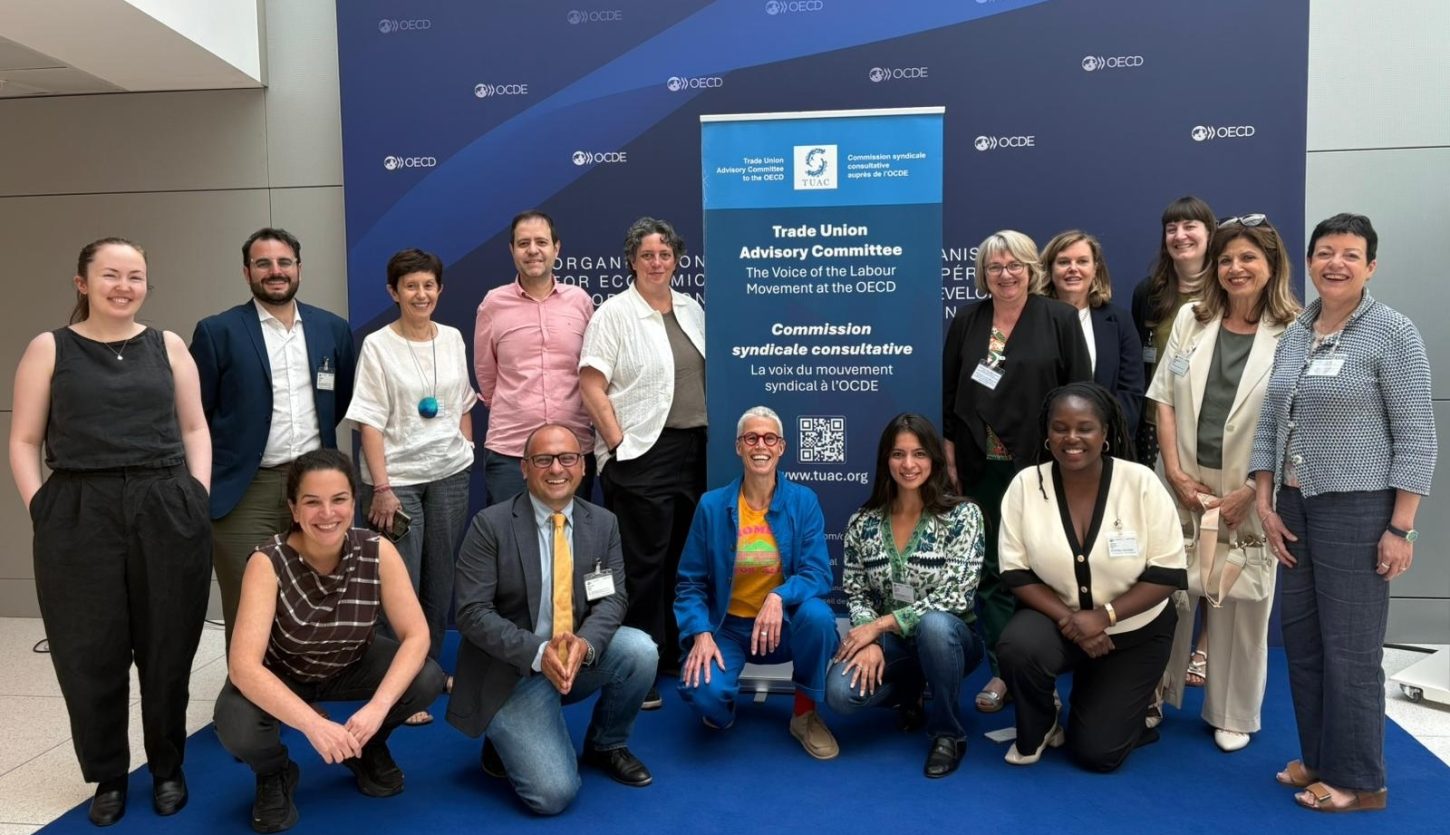
Fifty years after governments committed to the OECD Guidelines for Multinational Enterprises, trade unions are making concrete and urgent demands to strengthen them. At the Anniversary Week on Responsible Business Conduct, the TUAC delegation – with delegates from the Americas and Europe – brought the evidence from their own industries and bargaining tables. TUAC’s new recommendations paper The Way Forward, developed with affiliates and partner unions, set out what needs to change.
The OECD Guidelines set the standard for responsible business conduct. But this standard needs stronger incentives and consequences for MNEs. Workers need enforceable due diligence, consistently applied NCP procedures, and social dialogue that gives them a real seat at the table.
The week started off with the launch of the NCP Annual Report. NCPs dealt with a record number of cases with continued inadequate resourcing. The TUAC delegation underlined the importance of mediation facilitated by the NCP, yet companies must be incentivised to participate in dialogue. Consequences must take effect if dialogue is rejected and recommendations must be followed up to encourage companies’ meaningful and lasting alignment with the Guidelines. TUAC delegates also highlighted the necessity and benefit of including trade unions fully into the structures of NCPs.
TUAC confronted a panel of multinational enterprises at the OECD Global Forum on RBC with the corporate record: tens of thousands of US factory closures since 1994, while automaker profits and stock buybacks soared. At the same time, workers’ democratic participation in the workplace was systematically undermined. Behind these numbers are workers and communities paying the price for corporate strategies that treat labour rights as optional.
During a panel organised by TUAC, BIAC and OECD Watch, TUAC delegates challenged companies including Amazon – recently issued with recommendations by the Canadian NCP – to engage with trade unions and treat workers as rightsholders rather than a metric.
At TUAC’s side event on RBC for a Just Transition, attended by ambassadors, NCPs and the OECD Deputy Secretary-General, trade unions insisted that a just transition is a right for workers, not a policy option. FGTB Belgium demonstrated what this can mean in practice: collective agreements securing individual training entitlements through social dialogue. CUT-Brazil shared insights on an ongoing NCP case to press for corporate accountability in the fight for climate action.
Enterprises, governments, NCPs and the OECD must act on The Way Forward to close the gap between commitment and implementation – particularly on labour rights – and use the OECD’s new Key Actions to ensure the green transition is fair for workers. Trade unions will hold them to it.
Read The Way Forward here.
