



19 October 2026
How collective bargaining is shaping the rules of AI at work
By Veronica Nilsson, General Secretary of the Trade Union Advisory Committee to the OECD (TUAC), and PierPaolo Bombardieri, General Secretary of the Unione Italiana del Lavoro (UIL). From mechanisation to electrification to digitalisation, workers have had to organise and fight for their share of ...
14 October 2026
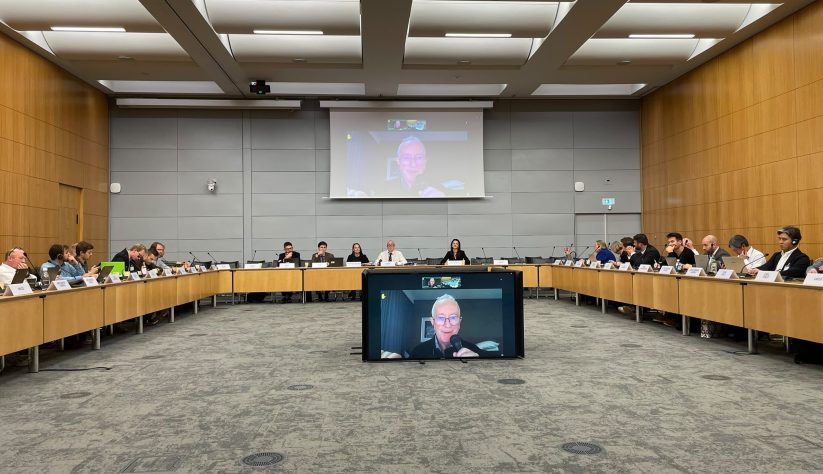
TUAC hosts Steve Keen on why getting climate risk right matters for workers
TUAC welcomed economist Steve Keen, Honorary Professor at University College London, to its Working Group on Economic Policy in Paris on 13 October for a discussion on how the economic consequences of climate change are modelled – and what this means for workers. At stake for trade unions is how ...
13 October 2026
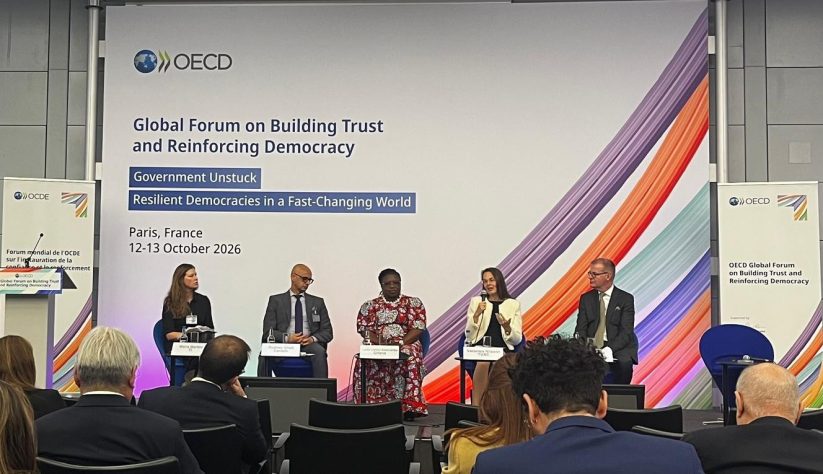
Rebuilding trust in public institutions starts with social dialogue, says TUAC
Only 31% of people across OECD countries believe the political system lets people like them have a say, according to the OECD’s 2026 Trust Survey, and those who feel they have no say trust their national government far less. At the OECD Global Forum on Building Trust and Reinforcing Democracy on ...
01 October 2026
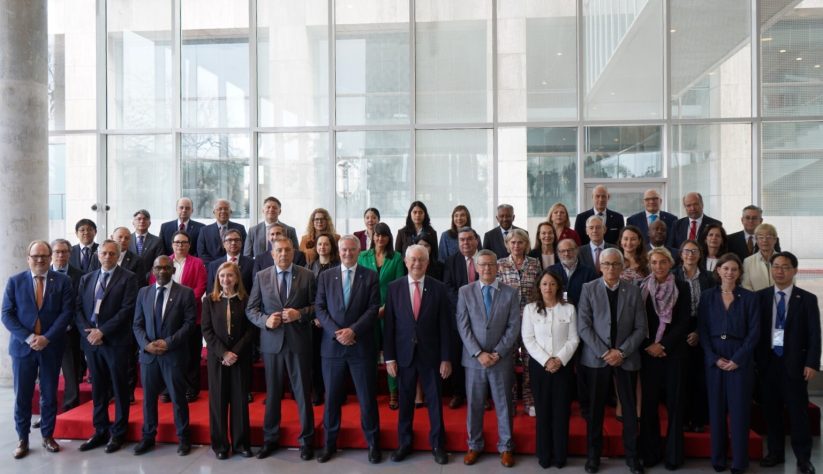
TUAC calls for OECD regional action plan on AI for decent work in Latin America and the Caribbean
The OECD and governments across Latin America and the Caribbean have committed to tackling informality, which keeps nearly half the region’s workers outside the formal economy. This becomes even more urgent as AI advances. ILO and World Bank analysis shows that the jobs most exposed to AI ...
28 September 2026
New TUAC brief gives workers concrete guidance to negotiate a truly just transition
The Paris Agreement calls a just transition of the workforce an “imperative” – and a new TUAC policy brief, Responsible Business Conduct for a Just Transition, published today, gives workers and their unions concrete guidance to negotiate one at company level. It shows how the OECD ...
25 September 2026
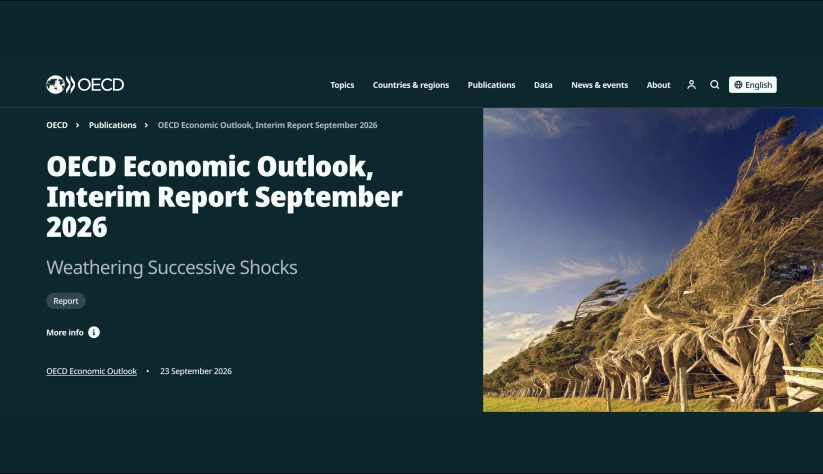
Resilient for whom? TUAC questions OECD growth story as workers’ real pay lags behind
TUAC questions the description of a “resilient” global economy in the OECD’s Interim Economic Outlook, published on 23 September, warning that headline growth hides a narrower, less equal picture: investment is piling into AI while workers’ real incomes face renewed ...

17 September 2026
Rebuilding workers’ bargaining power is key to managing AI at work, TUAC argues
TUAC called for human agency and workers’ voice to be at the heart of AI development and deployment at the Irish Human Rights and Equality Commission’s (IHREC) annual conference “Together Rising: Challenging Inequality, Countering Hate” in Dublin on 10 September. Legislation and ...

11 September 2026
TUAC calls for education investment as PISA 2025 reveals deepening crisis
The latest PISA results expose a mounting crisis in education across the OECD, with student performance at its lowest recorded levels in science, reading and mathematics. TUAC calls on governments to invest in quality public education, reject the false promise that AI tools can substitute for ...

01 September 2026
Job creation needs to go hand-in-hand with skills development, TUAC argues at Nordic-Baltic PIAAC conference
TUAC called for a shift in approach to AI transformation at this week’s Nordic-Baltic PIAAC Conference on adult skills in Jyväskylä, Finland, stressing that retraining will not be enough to address the economic disruption that likely lies ahead: governments also need to ...

13 July 2026
Technology in healthcare must serve workers, TUAC tells OECD Forum on Gender Equality
TUAC called on policy makers to put care workers at the centre of technology decisions in healthcare at the OECD Forum on Gender Equality, held in Paris on 8–9 July. In a session on digital technologies, data and the future of the care economy, trade unions warned that new tools are no quick fix ...

09 July 2026
TUAC challenges OECD to put workers’ rights at heart of Latin America and Caribbean programme
Workers’ rights across Latin America and the Caribbean are in alarming decline. At the Ministerial Dialogue in Madrid on 1 July, TUAC challenged governments to ensure the OECD’s Regional Programme becomes a genuine force for protecting workers and tackling inequality. Trade unions ...

07 July 2026
Employment Outlook 2026: low unemployment masks deepening challenges for workers
The average unemployment rate across the OECD remains at a low of 4.9% in May 2026, according to the latest OECD Employment Outlook. TUAC warns that this apparent strength masks deeper challenges for workers. Signs of cooling are already emerging: unemployment rates are ticking up in many ...
