


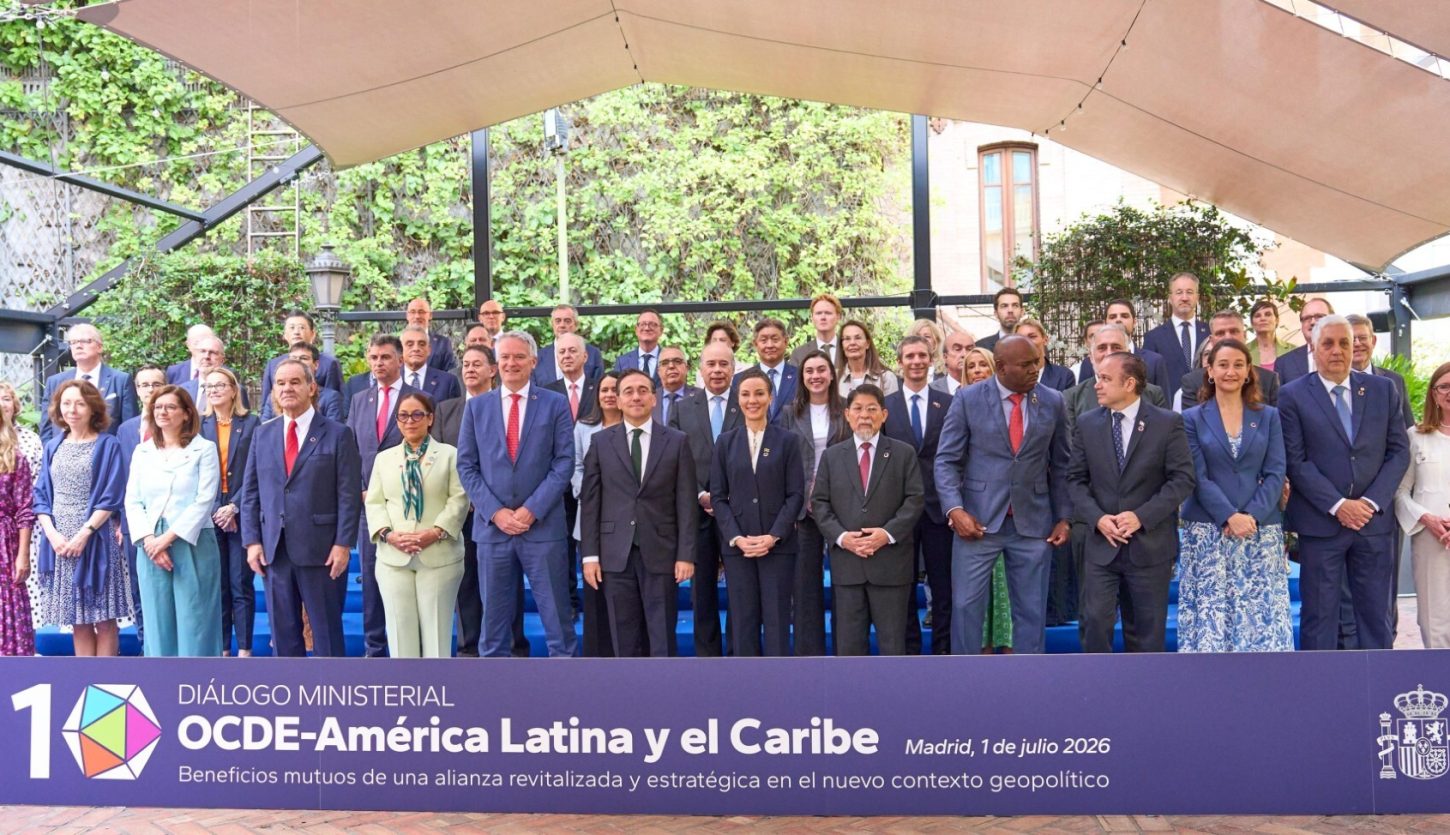
Workers’ rights across Latin America and the Caribbean are in alarming decline. At the Ministerial Dialogue in Madrid on 1 July, TUAC challenged governments to ensure the OECD’s Regional Programme becomes a genuine force for protecting workers and tackling inequality.
Trade unions point to a sharp divide across the region. Brazil and Colombia show that the right policies deliver results – expanding collective bargaining, strengthening wage-setting mechanisms and labour rights, and broadening social protection have made real inroads against poverty and informality. TUAC contrasts this with the deteriorating situation elsewhere, where the rule of law is under threat, organising is fraught with risk for workers and union leaders, and fundamental labour rights are violated.
The 2026 ITUC Global Rights Index bears this out. Panama now ranks among the ten worst countries in the world for workers after its rating dropped from 4 to 5, reflecting a pattern of systemic violations. Among the documented cases, the government responded to teacher union strikes over pension rights with widespread repression – including beatings, arbitrary arrests, and wage withholding – targeting teachers, banana workers, and Indigenous communities. Argentina has also fallen to a rating of 5. TUAC warns that Latin America accounts for the highest number of cases before the ILO Committee on the Application of Standards this year, including for alleged violations of fundamental labour rights in Argentina, Colombia and Panama.
When governments respond to workers exercising their rights with repression, the OECD must show the way – using the Regional Programme as a vehicle for defending democracy and driving concrete improvements in workers' lives – not just advancing economic cooperation.
TUAC sets out three priorities for the Programme: embedding decent work, the fight against inequality, and social inclusion at its centre; integrating freedom of association and collective bargaining as cornerstones of democracy and good governance; and advancing corporate accountability, including through effective implementation of the OECD Guidelines for Multinational Enterprises.
Beyond the Regional Programme, TUAC urges OECD and LAC governments to ratify the newly adopted ILO Convention 193 on Decent Work in the Platform Economy, the first binding international treaty on platform work. TUAC – which has gained three new affiliates from Colombia, Costa Rica, and Peru in the last two years – will continue to press this agenda, including at the upcoming LAC Ministerial Summit in Montevideo, Uruguay, on 29-30 September.
