


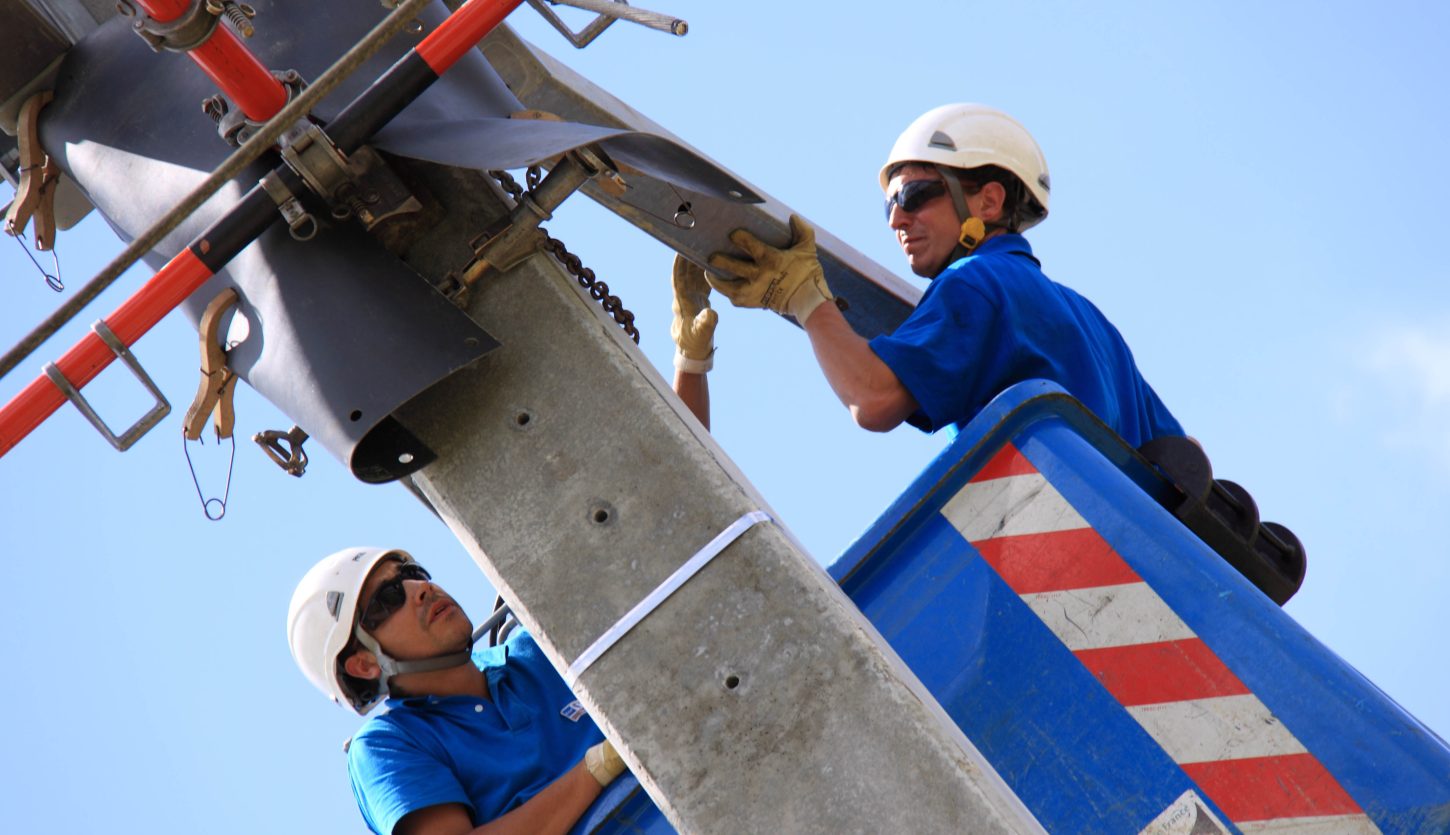
Trade unions have welcomed this week’s publication of the OECD’s ‘Fast-tracking Net Zero by Building Climate and Economic Resilience’ Executive Summary for Policymakers’, hailing its inclusion of a dedicated focus on just transition. While embracing this new focus on workers, TUAC cautions that significant gaps remain around the report’s approach to collective bargaining.
This dedicated chapter on bringing workers and citizens on board with the just transition represents an important reflection of the concerns that TUAC has consistently raised in OECD committees. It acknowledges that “building and maintaining public support for climate policies depends on a genuine commitment to ensuring a just transition that leaves no workers, households, regions, or countries behind.”
The report also recognises key labour market challenges, including that job displacement risks are highly concentrated in certain industries and regions, and that job losses in high-emission industries are 24% more costly than in low-emission industries. The report also correctly identifies the scale of the challenges facing low-income countries, where informal employment represents 89% of total employment compared to only 16% in high-income countries.
Furthermore, it identifies critical policy gaps around gender equality, noting that only 17 out of 30 OECD countries consider gender aspects in environmental policymaking and just 55 national climate action plans globally mentioning gender equality.
However, TUAC is critical of the report’s conditional framing of social dialogue. The report states that collective bargaining and social dialogue are valuable only “when aimed at finding solutions for all parties” – failing to recognise that worker representation is both a fundamental right and an essential tool for successful climate transitions. The report also fails to examine job quality differences between green and traditional sectors, and regrettably omits reference to the 2015 ILO Just Transition Guidelines – the most authoritative international framework in this area.
Trade unions urge OECD governments to translate the report’s analysis into action and place just transition at the heart of climate policies: scale up investment in social protection systems, and ensure that developing countries receive the financial support needed for worker-centred green transitions through investment in clean energy, boosting value-addition and building trade union capacity. Most critically, governments must recognise collective bargaining as an essential component of just transition policies.
We welcome the OECD’s horizontal project putting workers on the agenda, but governments need to consider unions as central in the fight against inequalities and the scaling-up of climate action. Strong collective bargaining is not an extra - it is essential for a successful and fair transition that leaves no one behind.
TUAC will continue advocating for these priorities in upcoming international forums, fighting to ensure that worker voices shape the policies that determine their futures.
Photo credit: Legoupi S. / ILO
