


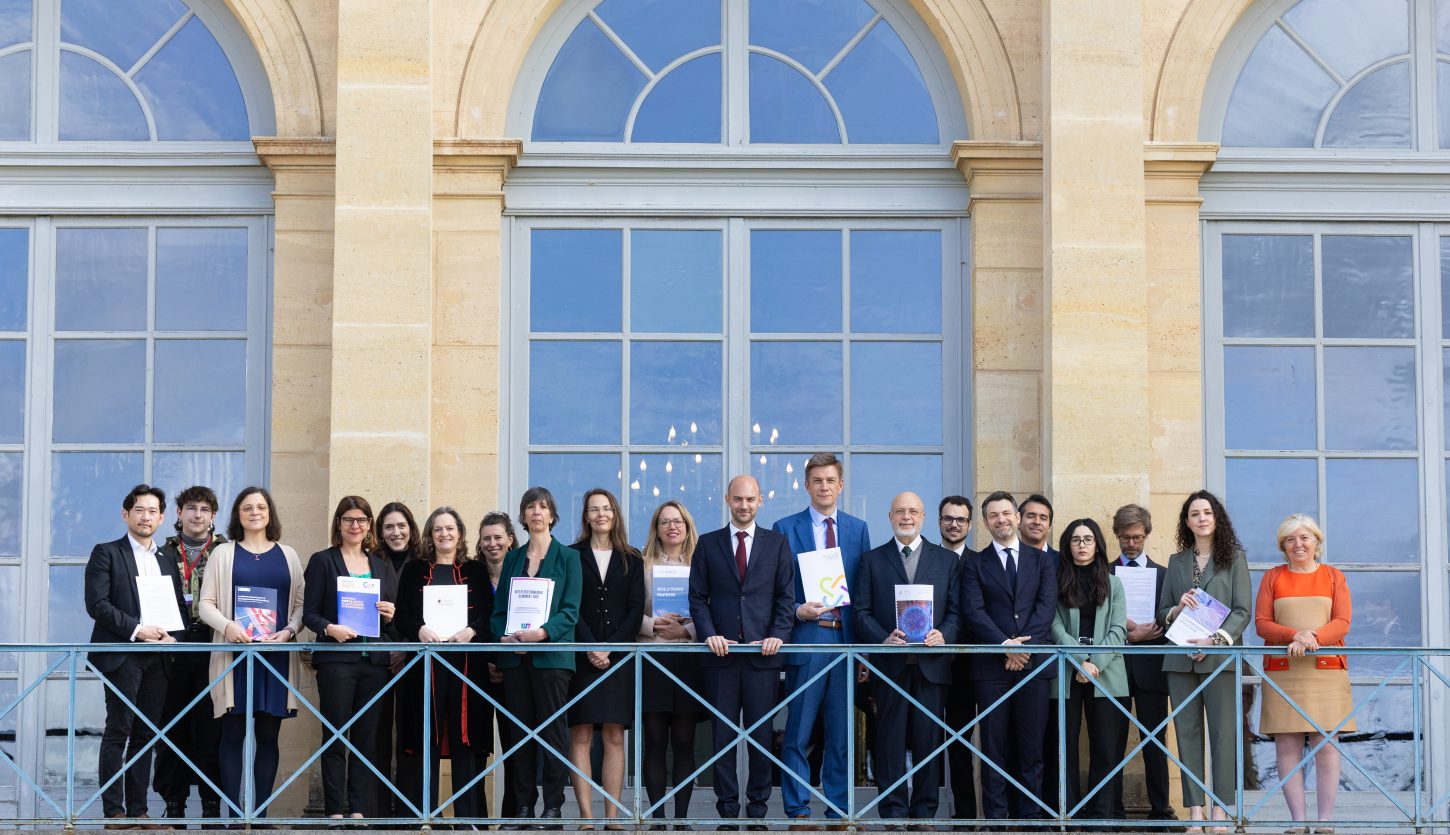
Tackling global imbalances means confronting the structural inequalities in income, wealth, and power at their root, trade unions argue in the 2026 Labour 7 (L7) statement launched on 16 April. The statement, released as L7 representatives and other G7 engagement groups met the French Foreign Affairs Minister to present their priorities for this year’s G7 under the French presidency, urges G7 countries to work for peace and an end to ongoing wars. It also sets out a roadmap for addressing structural imbalances through social justice, respect for international law, and the reduction of inequality.
The statement points to alarmingly high levels of inequality across the OECD and globally. Average income of the top 10% of households is nine times higher than that of the bottom 10%, while the top 10% of the global population owns approximately 75% of wealth – compared to just 2% held by the bottom 50%. These disparities are neither accidental nor inevitable: they reflect a long-running shift of income and power from labour to capital that G7 governments must confront through action on both wages and taxation.
The L7 urges the G7 to support the implementation of minimum living wages in line with the international definition agreed at the ILO in 2024, with collective bargaining and social partners at the centre. Trade unions call for the establishment of an international platform to eradicate in-work poverty, bringing together unions, civil society, development agencies and business organisations.
The L7 also demands that G7 members ensure fair and progressive taxation of multinational corporations and high-net-worth individuals, including through a tax on windfall profits and a coordinated minimum effective tax on the ultra-wealthy. The statement calls on the G7 to support the establishment of an International Panel on Inequality, in line with the proposal made at the G20 last year.
Workers are bearing the cost of a global system that protects wealth and punishes wages. The G7 cannot address global imbalances if tax systems let the wealthiest off the hook and working people are asked to fill the gap.
The same capital-over-labour dynamic runs through the trade system, where suppressed wages and weakened bargaining power trap countries in a vicious circle of wage restraint and labour market flexibilisation to maintain or regain competitiveness. The L7 Summit, to be held in Paris on 5 May on the eve of the G7 Trade Ministerial, will bring together trade union leaders, G7 representatives and academics to push the G7 to adopt a roadmap for fair trade grounded in decent work and collective bargaining.
Rising inequality, concentrated wealth and eroding labour rights are global realities that demand global responses. G7 members have a particular responsibility to lead towards an alternative trade model, and advance policies that ensure fair taxation, living wages and strengthened collective bargaining, promoting social justice across the multilateral system.
Read the full L7 statement here.
