


The OECD and governments across Latin America and the Caribbean have committed to tackling informality, which keeps nearly half the region’s workers outside the formal economy. This becomes even more urgent as AI advances. ILO and World Bank analysis shows that the jobs most exposed to AI automation in the region are formal ones – the jobs governments are trying to create more of. If they go, more people end up in informal work, not fewer.
Workers who keep their jobs face a different threat. Algorithmic tools are taking over managerial functions, intensifying the pace of work and putting pay, conditions and privacy at risk. They gather huge amounts of worker data, expanding employers’ power to monitor staff, which the OECD warns can have “a chilling effect on the right to freedom of association”. Companies have already used these tools to stop workers organising.
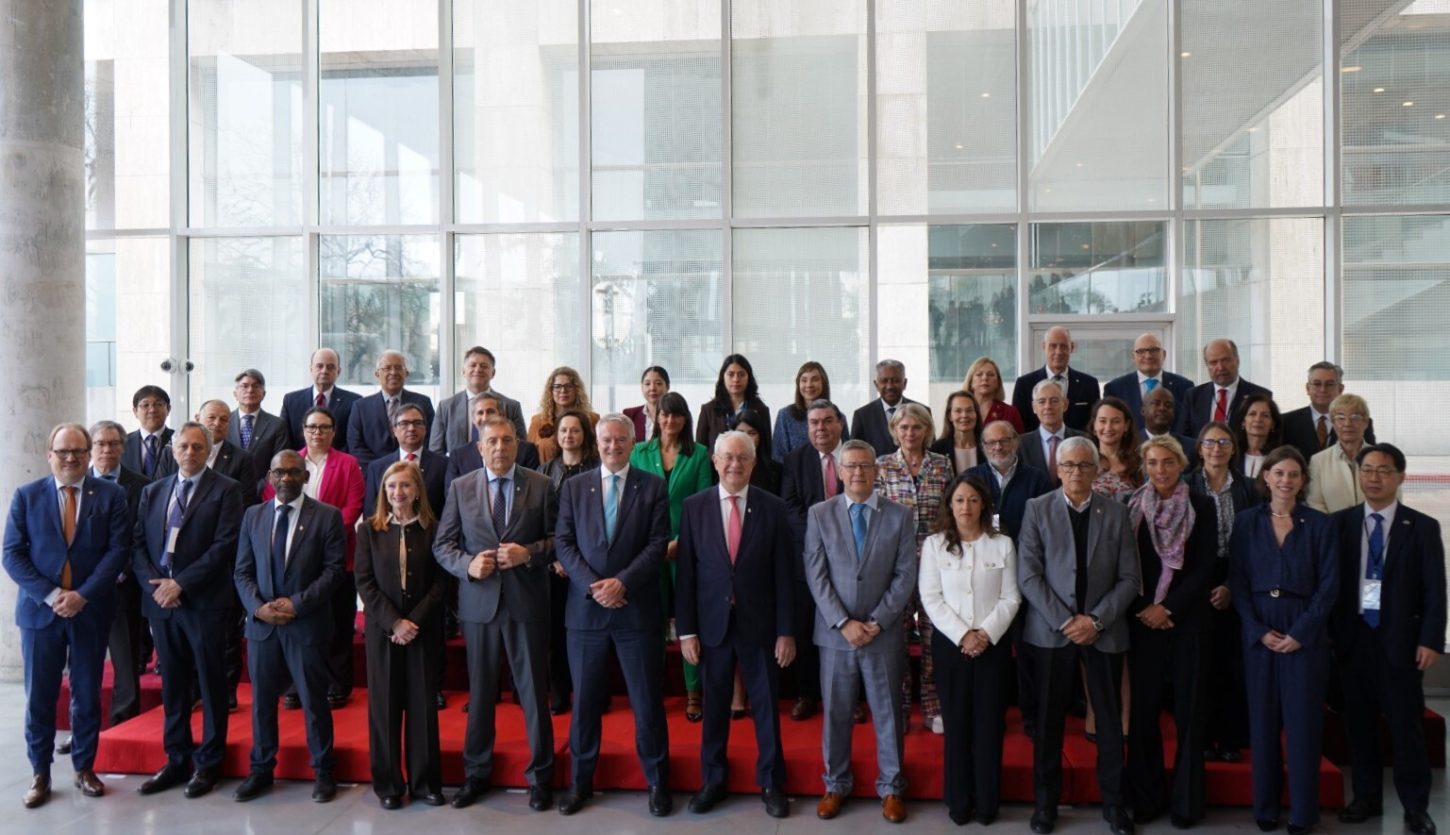
TUAC and its affiliates in the region are calling on the OECD to develop a regional Action Plan on AI for Decent Work and Shared Prosperity so to address these concerns. TUAC highlighted this demand at the “Innovating and adopting AI without leaving anyone behind” panel at this week’s 11th OECD Latin America and the Caribbean Regional Programme Ministerial Summit in Montevideo on 29 September, and again at the ministerial session on skills in the age of AI. The call for an Action Plan is also set out in a statement signed by TUAC’s affiliates in the region.
The statement asks governments to “expressly prohibit the use of AI for anti-union practices” and to require social dialogue and collective bargaining before AI systems are introduced at work. Under the Action Plan, the OECD should regularly review, with trade unions, what governments are doing to make sure AI creates decent jobs, using country-level indicators such as jobs lost and created and collective bargaining coverage. The OECD’s own AI Principles already call for labour rights to be protected across the AI value chain and for social dialogue to ensure a fair transition for workers. TUAC urges the OECD to turn them into concrete recommendations governments across the region can act on.
Both the statement and a new TUAC policy brief on negotiating a just transition were launched the day before at a side event with the Trade Union Confederation of the Americas (TUCA), hosted by the Uruguayan government. The message from TUAC was clear. In a region with systematic violations of labour rights and major gaps in social protection, the answer to weak growth and low productivity is not lower wages or weaker protections but stronger workers’ rights.
TUAC will keep working with its affiliates and partners in the region to bring union concerns directly to the OECD. It is also seeking a stronger focus on labour rights in the OECD’s Regional Programme, starting with a proposal that next year’s Ministerial Summit be devoted to just transition.
