


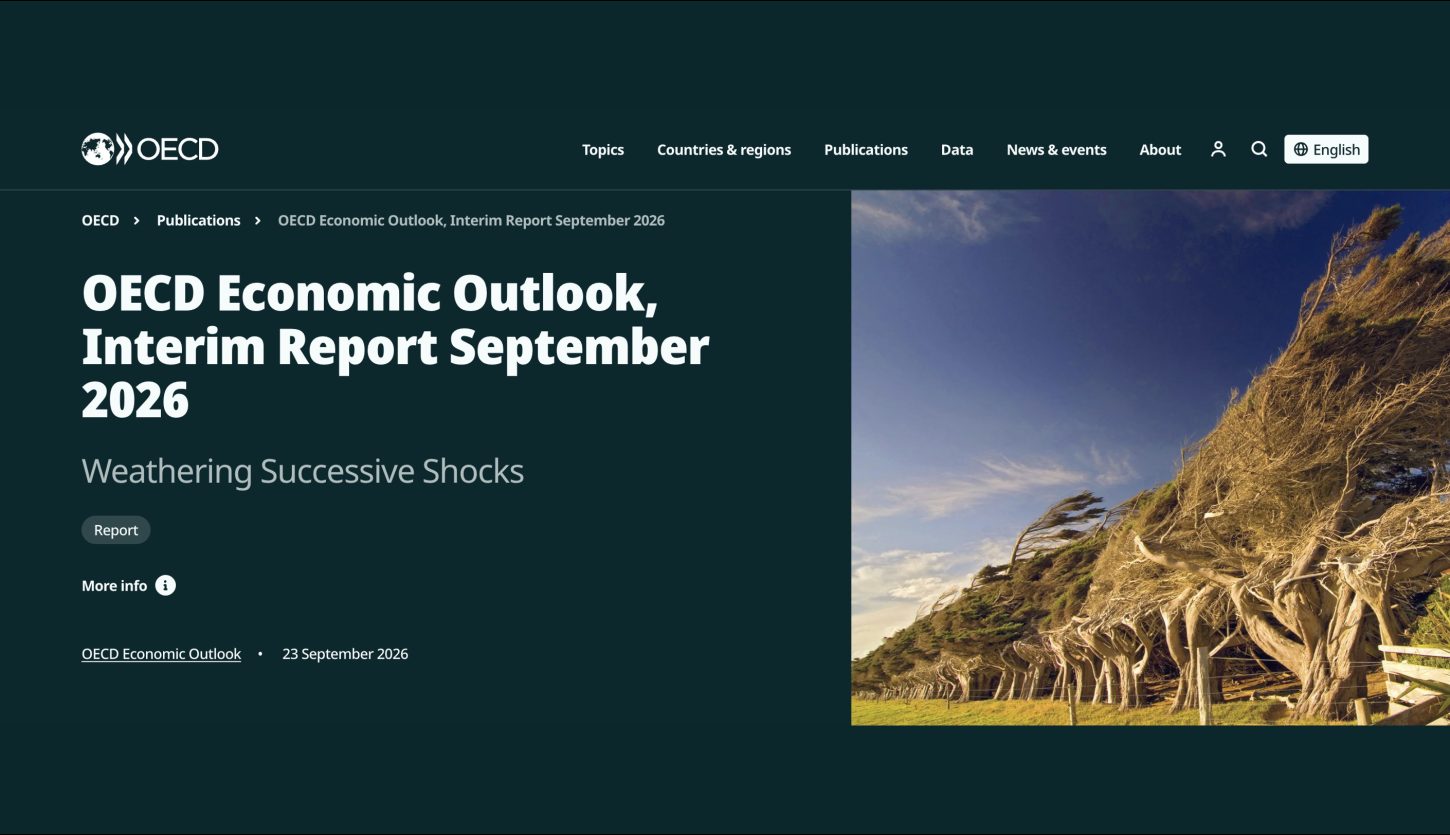
TUAC questions the description of a “resilient” global economy in the OECD’s Interim Economic Outlook, published on 23 September, warning that headline growth hides a narrower, less equal picture: investment is piling into AI while workers’ real incomes face renewed pressure.
The OECD’s own figures bear this out. Growth is put at 2.9% this year and 3.0% next, with G20 inflation now 4.1% in 2026 and 3.6% in 2027, higher than in June – and the Outlook acknowledges that faster price rises, slower real-income growth and higher interest rates are weighing on the wider economy.
Trade unions highlight how narrow the base of that growth is: AI and its chip supply chains take a growing share of investment, output and trade. A capital-intensive boom in a few technology sectors, TUAC argues, can keep GDP rising without a matching rise in jobs, wages or household spending. The wage figures point the same way: nominal wage growth in most economies has been flat since the first quarter of the year, the OECD reports, even as inflation has begun to rise again. The real test of resilience, TUAC contends, is not whether GDP keeps growing but whether productivity gains reach workers as higher real wages, secure jobs and better living standards.
The Hormuz shock sharpens the argument: the OECD accepts that dearer energy and food will eat into household budgets and that a marked drop in demand has helped markets adjust. TUAC spells out what that means for workers: more spent on heating, fuel and food, less on everything else, and risks of rising unemployment if companies are squeezed. The ILO traces the same chain: if oil prices stay 50% above their January–February average, global real labour income could be 1.1% lower this year and hours worked could fall by the equivalent of 14 million full-time jobs.
The OECD’s answer is for central banks to keep inflation expectations anchored and weigh possible rate adjustments. TUAC cautions against moving to higher rates, which risk weakening growth further and deterring the investment needed to tackle the crisis at source.
The Outlook also lists extreme weather as a risk, and the OECD should, in TUAC’s view, build climate change into its core analysis, as it increasingly affects food and energy prices, infrastructure and public finances. The Hormuz crisis, meanwhile, shows how exposed economies are when they rely on a few fossil-fuel suppliers; cutting that reliance, trade unions maintain, is a matter of economic security and price stability.
TUAC calls for investment in renewable electricity, climate adaptation and resilient public infrastructure to become a central macroeconomic priority. This should be backed, trade unions add, by strong just transition policies, agreed through social dialogue, that guarantee quality jobs, training, income security and a say for workers in industrial change.
Read TUAC’s full analysis here.
Working people are absorbing the cost of the energy crisis by spending less. An economy that only gets through a crisis at the expense of the people who keep it running is not resilient – it is just not collapsing yet. Real resilience means protecting living standards and investing so that workers are not left to pay for the next shock.
