


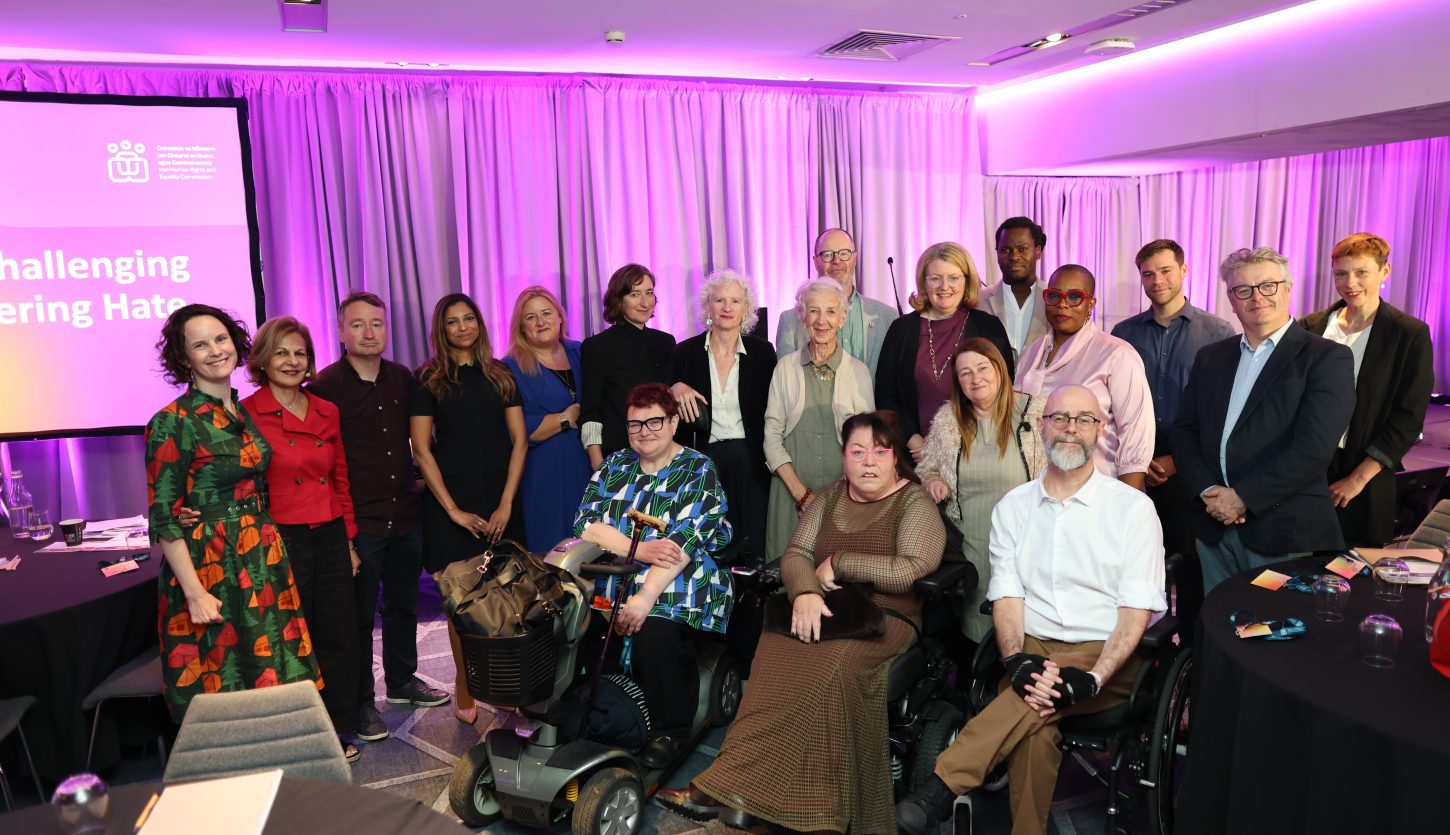
TUAC called for human agency and workers’ voice to be at the heart of AI development and deployment at the Irish Human Rights and Equality Commission’s (IHREC) annual conference “Together Rising: Challenging Inequality, Countering Hate” in Dublin on 10 September. Legislation and collective bargaining, trade unions argue, are the foundation for protecting rights at work and safeguarding democracy throughout the AI transformation. Headlines focusing on existential risks or framing AI as an inevitable force detract from the concrete ways AI is already impacting the right to work.
Algorithmic management – which a recent OECD survey indicates has become standard practice across major economies – is a case in point. A Nordic survey of about 6,800 trade union members in customer service, telemarketing and warehousing tied algorithmic management to heavier workloads, higher stress and reduced trust. OECD research has also found that AI in the workplace frequently speeds up and intensifies work while narrowing worker control. Companies have also deployed AI tools to anticipate and disrupt organising efforts, and over a quarter of managers surveyed struggled to understand the logic behind the tools’ decisions – leaving workers without effective means to challenge them.
TUAC also cautioned that AI advancement is forecast to increase polarisation and exacerbate inequalities. IMF analysis has found that AI is likely to affect 60% of jobs in advanced economies, with the benefits concentrated among higher earners while other workers could see wages fall and opportunities narrow. Forthcoming OECD research suggests that unmanaged AI deployment also risks reinforcing gender inequality – for example, by automating the routine components of roles predominantly held by women while directing higher-value technical tasks toward male-dominated teams by default.
Yet these outcomes are not inevitable, TUAC emphasised. AI has the potential to raise living standards and improve working lives, but whether it does so depends on the forces and interests shaping its trajectory. OECD research and recent examples of collective agreements show that when workers are given a say in how and when it is used through collective bargaining, AI can be a tool that benefits both workers and companies. In addition to regulation to address the specific risks raised by AI, governments therefore also need to boost workers’ bargaining power more generally. Without strong collective institutions, TUAC contends, workers lack the leverage to shape how these tools are introduced – or to push back when they cause harm.
Experience shows that collective bargaining is crucial to ensuring AI serves and complements human labour, rather than the other way round. Regulatory safeguards around AI development and use must therefore be accompanied by broader policy levers to strengthen workers' voice and bargaining power.
Photo credit: Julien Behal
