


Economic policy
TUAC represents the voice of labour in the international economic policy debate. Through its engagement at the OECD, TUAC fights for economic policies that create full employment and that give working people a fair share of the wealth they create.
This is done through our engagement on fiscal and monetary policy at the Economic Policy Committee and its Working Party on Macroeconomic and Structural Policy Analysis.
This work is led by Filip Stefanovic and Maciej Kumor. For more information, please contact stefanovic@tuac.org and kumor@tuac.org.
 Download (186.89 KB)
TUAC’s Working Group on Economic Policy conveyed to discuss current economic trends and the work of the OECD (EN/FR)
(Version française ci-dessous) On 30 September and 1 October 2021, the TUAC held its Working Group on Economic Policy. The two-day meeting was chaired by Bill Spriggs (AFL-CIO Chief Economist) and brought together TUAC trade union affiliates, the ITUC, Global Union Confederations, the ETUC, OECD ...
OECD Economic Outlook, Interim Report: “Keeping the Recovery on Track”, but Let Us Not Forget to Bring Workers on Board (EN/FR)
(Version française ci-dessous) The latest OECD Economic Outlook Interim Report, presented on 21 September 2021, has revised GDP forecasts compared to last May’s Economic Outlook, sticking overall to the macroeconomic scenario depicted in the previous editions. Among developed economies, Canada ...
TUAC Statement on Youth 2021/ Déclaration du TUAC sur la Jeunesse 2021
Youth unemployment rose in all OECD countries during the crisis. Many existing challenges faced by young people are being exacerbated during this time including: Education quality and costs – including student debt; Lack of income to cover housing and food costs becoming dependent on food banks ...
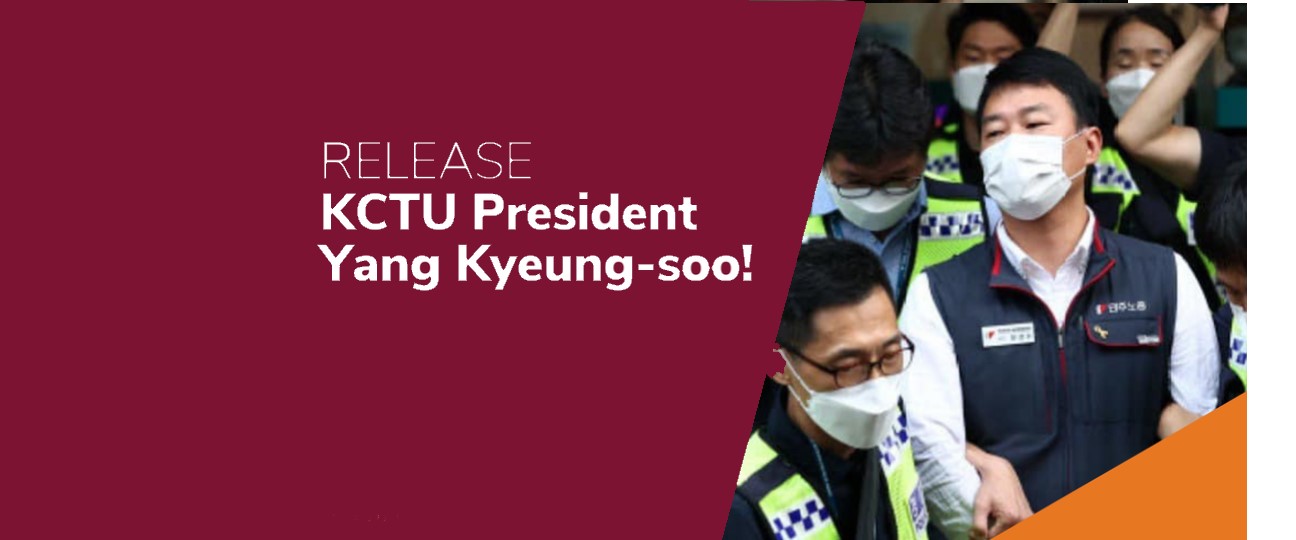
Arrest of Korean trade union leader raises concerns about freedom of association and assembly
The TUAC joins other international trade union organisations calling for the immediate release of Korean Confederation of Trade Unions (KCTU) President Yang Kyeung-soo, who was arrested on 2 September 2021. The arrest warrant was issued following a demonstration held on 3 July, which the government ...
Global Tax Reform Process Kept Alive / Le processus de réforme de la fiscalité internationale, toujours en vie
On 1 July 2021, the OECD-hosted and G20-mandated “Inclusive Framework” on Base erosion and profit shifting (BEPS) adopted a historic roadmap for a substantial reform of corporate tax rules, to address the undertaxation of large businesses and curb the global tax competition race to the bottom. ...
Reaction to the OECD Economic Survey of Spain 2021 / Comentarios al Estudio Económico de España 2021 de la OCDE
Key findings On 27 May 2021, the OECD published the Economic Survey of Spain, which is a country-specific economic assessment conducted every two years, evaluating the state of the economy and recommending most urgent structural reforms for boosting growth. Therein, the OECD also suggests and ...
