


11 March 2019
Outcomes of the OECD’s Going Digital first phase: Shaping policies rather than the digital transformation itself
The digital transformation has become one of the top public policy issues within less than a decade attesting to its fast and disruptive effects on almost all economic sectors, daily lives and the world of work. Two years after the launch of the OECD’s Going Digital Horizontal Project and ...
05 March 2019
Addressing the tax challenges of digitalisation – TUAC response to OECD consultation
On 13 February 2019, the OECD published a consultation document outlining four proposals to address the tax challenges of the digitalisation of the economy: three proposals related to a revision of international rules on transfer pricing and permanent establishment status and one proposal to insert ...
04 October 2018
National strategies on work 4.0 & the role of trade unions – EESC Study
On 13 February 2019, the OECD published a consultation document outlining four proposals to address the tax challenges of the digitalisation of the economy: three proposals related to a revision of international rules on transfer pricing and permanent establishment status and one proposal to insert ...
04 October 2018
National strategies on work 4.0 & the role of trade unions – EESC Study
On 13 February 2019, the OECD published a consultation document outlining four proposals to address the tax challenges of the digitalisation of the economy: three proposals related to a revision of international rules on transfer pricing and permanent establishment status and one proposal to insert ...
27 September 2018
Artificial Intelligence (AI) – The OECD starts discussing general and policy principles
The OECD is moving ahead with its work on Artificial Intelligence (AI) towards developing a Council Recommendation in the course of 2019 and creating an AI observatory as a pillar of the second phase of the Going Digital project. On 24-25 September, the first meeting of the AI expert Group at the ...
31 May 2018
The OECD Going Digital Project – Comments & Ways Forward
The interim report of the Going Digital horizontal project released for the MCM 2018 provides good insights on where the OECD stands on developing policy recommendations to address the digital transformation of our economies. The OECD report acknowledges that digital business models are putting ...
31 May 2018
The OECD Going Digital Project – Comments & Ways Forward
The interim report of the Going Digital horizontal project released for the MCM 2018 provides good insights on where the OECD stands on developing policy recommendations to address the digital transformation of our economies. The OECD report acknowledges that digital business models are putting ...
01 May 2018
The Swedish Job Security Councils – A case study on social partners’ led transitions
The Swedish Job Security Councils are one concrete, existing mechanism in ensuring smooth transitions from one job to another. In existence since the 1970s, they are now covering almost all economic sectors (except companies without collective agreements). This system is an example of how to ensure ...
04 April 2018
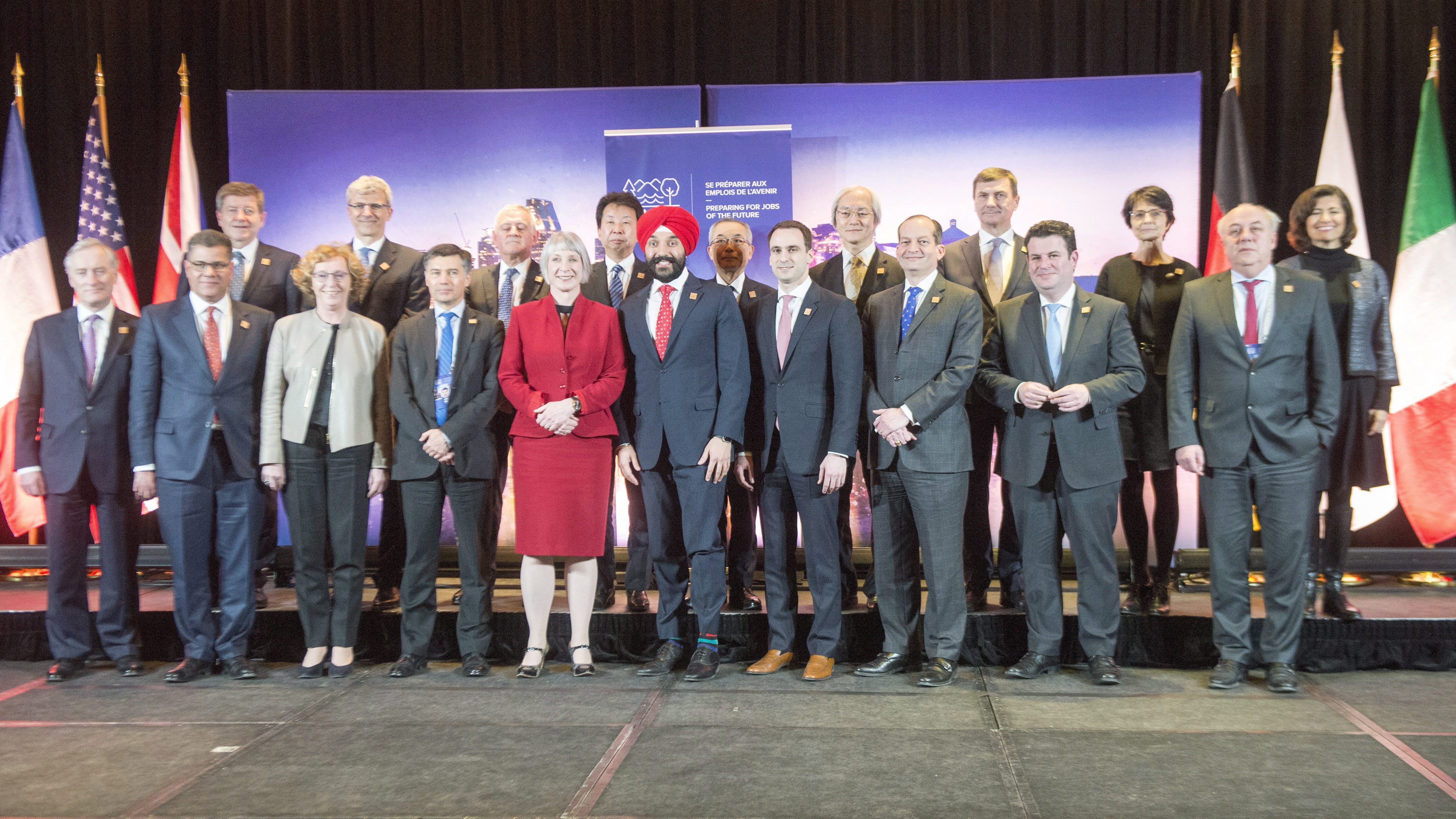
L7 Evaluation of the Outcomes of the G7 Innovation and Employment Ministerial Meeting 2018
The G7 Innovation and Employment Ministers met in Montréal on 27 and 28 March. The L7 welcomed the cluster approach towards building a joint understanding on how to reconcile the goals of innovation and quality job creation. The L7 was invited to parts of the Employment Ministerial and the joint ...
07 December 2017
Digital Divides
What are digital divides? Digital divides refer to the unequal access (or lack of access) to information and communication technology (ICT) across countries, regions or certain sections of the society like low-income earners, rural populations, women, youth or migrants. The global digital divide ...
14 November 2017
Shaping the introduction of AI for the benefit of all
TUAC Briefing on the OECD Conference on Artificial Intelligence Paris, 26-27 October 2017 ...
09 March 2017
Key Recommendations & Outcomes of the Trade Union Forum on Digitalisation and the Future of Work
In February 2017, the TUAC held a Trade Union Forum on Digitalisation and the digital economy in Paris. Starting with an internal trade union exchange with over 80 national, sector-level and global unions’ representatives, it proceeded with panel discussions with the OECD, other stakeholders and ...
