


Labour market policy
Ensuring employment opportunities for all with fair wages and decent working conditions are key trade union principles. The OECD makes policy recommendations and publishes studies that influence labour market policies including working conditions and wages, the retirement age, and workers’ rights.
Through our engagement with the OECD’s Employment, Labour and Social Affairs Committee and its working parties, as well as the OECD’s Action Programme for Local Employment and Economic Development, TUAC is working to ensure that these recommendations and studies support and promote job quality, fair wages and strong labour market institutions and social dialogue, including collective bargaining and trade union representation.
TUAC’s work in this area is led by Filip Stefanovic and Adnan Habibija. For more information, please contact stefanovic@tuac.org and habibija@tuac.org.

Croatia must tackle low pay and precarious work, new OECD review shows
TUAC welcomes several recommendations in the OECD Labour Market Review for Croatia, published today, but regrets the report’s failure to include recommendations on collective bargaining, minimum wage and social dialogue. The review addresses Croatia’s labour market difficulties, ...

Governments must reverse collapse in training programmes, new TUAC policy brief warns
‘Time to Activate Labour Market Policies’, TUAC’s new policy brief, warns that governments are failing workers as investment in active labour market policies hits a two-decade low. OECD data shows spending fell to just 0.41 percent of GDP in 2023, while investment in training for ...
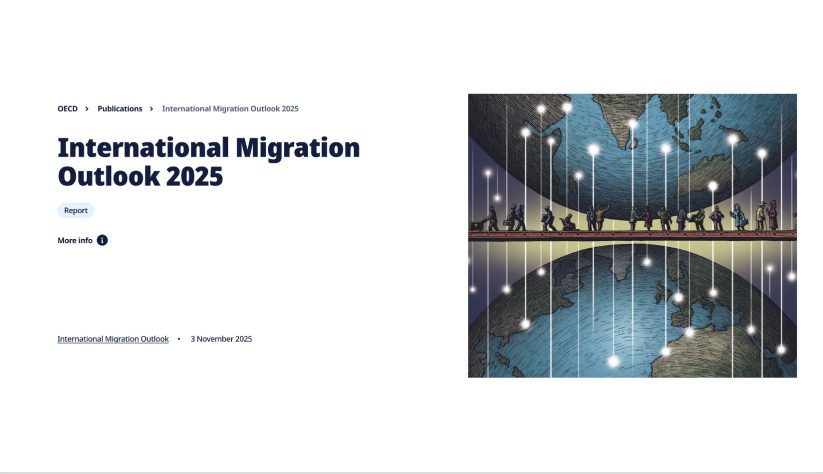
OECD Migration Outlook fails to adequately address labour exploitation and discrimination, TUAC warns
The OECD International Migration Outlook 2025, published this week, provides important data on migrant workers but misses crucial opportunities to address labour exploitation and discrimination, TUAC finds. This is particularly concerning given the report’s estimation of a 34% initial earnings ...
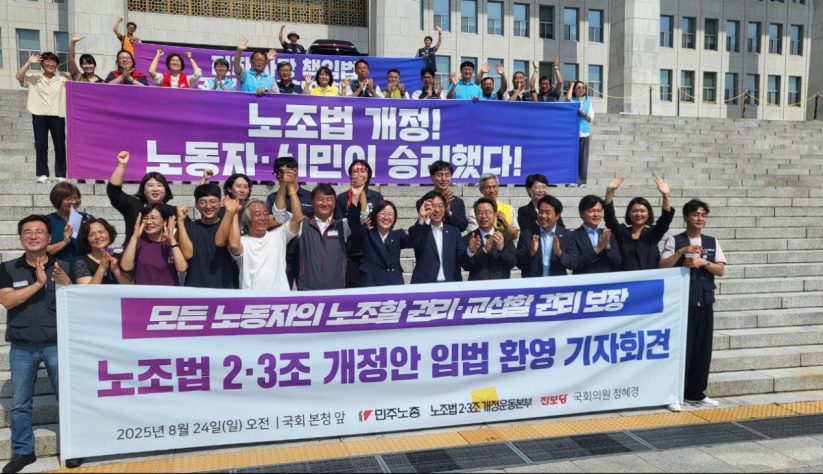
Korean unions triumph in securing landmark labour reforms to protect supply chain workers
TUAC welcomes the groundbreaking amendments to South Korea’s Trade Union and Labour Relations Adjustment Act (TULRAA), which significantly expand workers’ rights and employer accountability across supply chains. Trade unions fought for over two decades to secure these reforms that ...

Trade unions challenge glacial pace of gender pay gap progress
The OECD’s latest report on gender equality reveals that significant workplace inequalities endure across OECD and EU countries, with TUAC highlighting critical policy gaps in addressing systemic wage disparities affecting women workers. In 2023, the median full-time working woman earned 11% ...

TUAC: Improving Job Quality Key to Retaining Older Workers in the Labour Market
TUAC welcomes today’s OECD Employment Outlook and its recognition that job quality is essential for retaining older workers in the labour market. TUAC’s response notes the report’s findings of strong labour markets with record high employment levels and low unemployment across ...

TUAC Co-Hosts AI Roundtable at MCM, Demands Worker Voice in Technology Governance
In the margins of the 2025 OECD Ministerial Council Meeting, TUAC co-hosted the roundtable “AI at Work: Impacts for Productivity and Job Quality” following its 156th Plenary this week. The event, jointly organised with Business at OECD (BIAC), brought together trade union ...

TUAC webinar: Trade unions warn of worsening career prospects for younger workers amid stalling gender pay progress
The Trade Union Advisory Committee to the OECD (TUAC) today hosted the second webinar of its 2025 series, bringing together trade union representatives, researchers, and OECD officials to examine connections between narrowing gender pay gaps and declining opportunities for younger workers. The ...

Persistent Inequality Undermining Economic Growth, New TUAC Paper Warns
TUAC has today published a new paper warning that growing inequality is actively undermining economic growth across OECD countries, while proposing stronger collective bargaining as a crucial tool for closing the productivity-wage gap and building more sustainable economies. The paper, ...

No signs of a wage-price spiral, OECD report confirms
The latest OECD Wage Bulletin, published on 13 March, shows that real wages have finally started to grow on a yearly basis in a majority of OECD countries, after the sharp decline caused by the 2021-2022 inflation surge. In Q3 2023, real wage growth was positive in 25 of the 35 countries with ...
