


Unions have issued an urgent call for action on the global steel crisis as the OECD Steel Committee gathers on 4-5 November in Paris.
Any solution to the crisis must give workers a seat at the table, hold companies accountable, and guarantee social protections to drive a just transition, unions say.
The steel sector is one of the clearest showcases of the challenges that imbalanced trade and capital flows pose at global level. Unless we shift the paradigm – from short-term profits and subsidy-fueled overcapacity to sustainable jobs, worker rights and domestic expenditure to boost demand – the steel sector will not withstand the twin challenges of unfair global trade and the climate transition.
The joint statement from TUAC, IndustriALL Global Union and IndustriAll Europe stresses that while markets, capacities and trade flows are central to the debate, the human and social dimension must no longer be an afterthought.
The transition cannot and must not rest on workers’ shoulders alone. Multinational steel companies must reinvest profits in their workforce, in safe workplaces, in upskilling and decarbonisation – not simply reward shareholders and relocate production to the lowest cost jurisdiction.
In particular, the unions highlight that:
- Global steel excess capacity is projected to reach 721 million tonnes by 2027, putting enormous pressure on even the most efficient producers.
- Many closures or conversions in Europe and Latin America are of high-carbon blast-furnace/BOF plants, raising serious social and employment concerns about the future of the steel industry in those regions
- Public subsidies and trade measures must be linked to social conditionality – job retention, training, social dialogue, worker representation – to avoid a “just transition” turning into a “transition just for shareholders”.
- Unions call on governments and the OECD Steel Committee to incorporate labour rights, worker participation and corporate duty of vigilance into industrial, trade and climate policy frameworks.
“Europe’s steel industry cannot thrive under the weight of global overcapacity. Trade measures must go hand in hand with a robust industrial policy to defend jobs and drive the green transition. Steel workers are at the core of the global industrial and climate transformation – their voice and decent work must be guaranteed, or entire regions will be left behind.”
Unions stand ready to work with industry, governments and the OECD on practical solutions – including credible decarbonisation roadmaps, worker-led just transition plans, and strong global frameworks that protect jobs, rights and the environment.
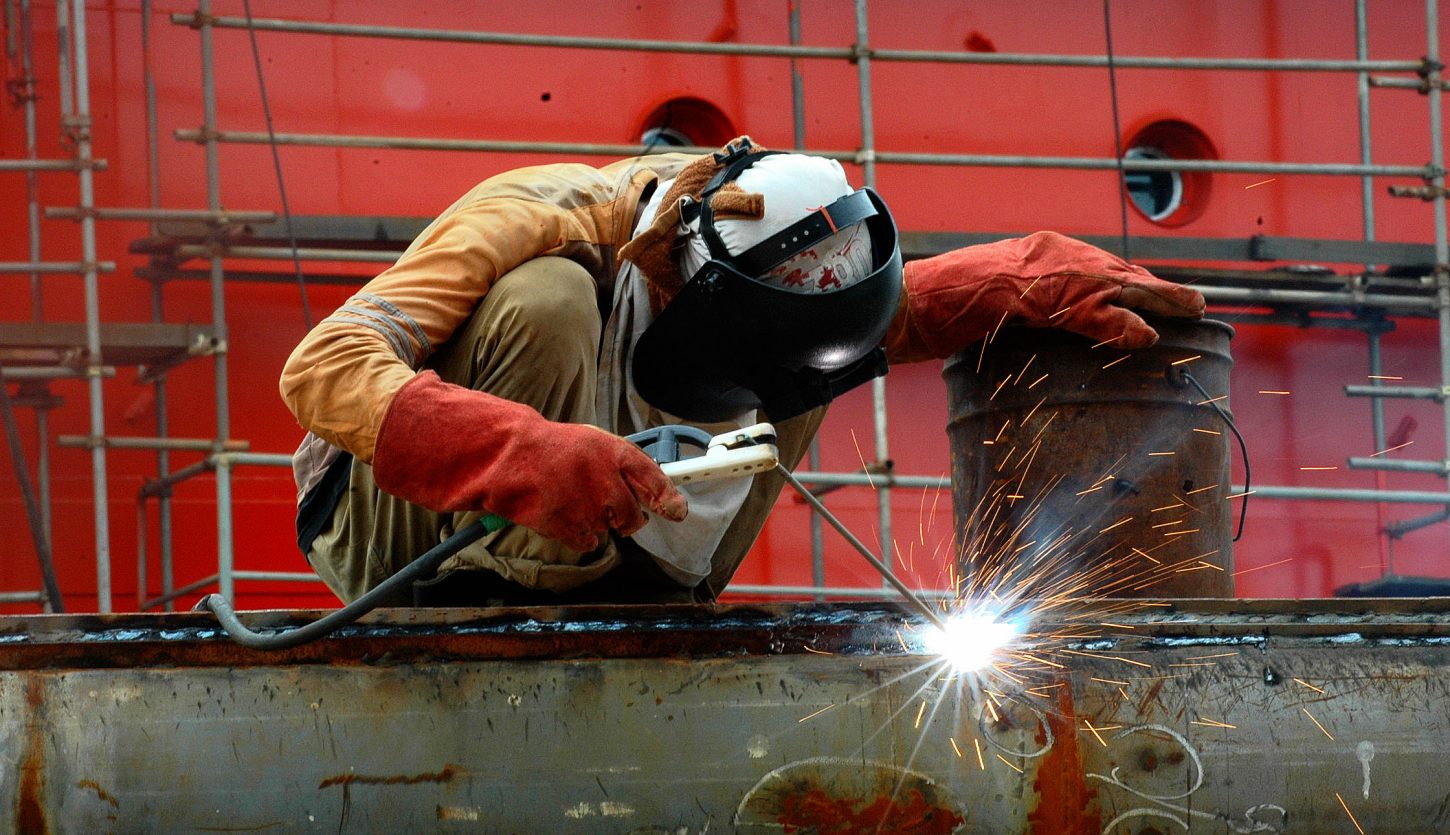
Photo credit: Mirza A./ ILO
